


Why Connex multi material printers can produce a sensory experience from a prototype

Article by Luis Doval updated May 25, 2012
Article

Some years ago, product development and simulation was limited to technical plans, graphic renderings and handmade models, which provided a limited description of how a product would actually work or be used by a consumer prior to its production. Many product features, reactions, textures, functions, and appearance were hard to imagine without a manufactured part. Due to the recent development of rapid prototyping technologies product designers are now able to overcome those limitations and obtain a full understanding of a product well in advance of its production.
Designers and production engineers can make improvements at an early stage in the development process, accelerate time to market, and foresee design or manufacturing problems. 3D printed prototypes are also a great marketing and testing tool, which can provide valuable insight into how a consumer will react and interact with a product.
To demonstrate the benefits of a rapid prototype I have modeled and printed a clip assembly using an Objet Connex Multi-material 3D Printer. Because it is a functional prototype that acts just like the real thing I can take my design validation to the next level with a sensory experience. Let me show you how it works:
-
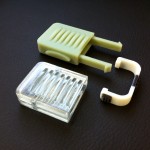
- 1. Clear, ABS like and rigid / flexible multi material parts

-

- 2. Hook and clear containing part ready for fit test

-
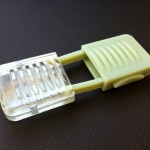
- 3. Hook entering containing part. Flexibility test.

-

- 4. Audible click when parts snap. Parts fit properly. Clear material provides a visual inspection.

-
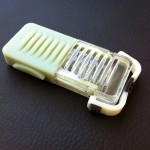
- 5. Flexible insert in the release tool allows the part to bend and adapt to the other part.

-
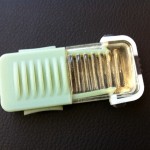
- 6. Release tool pushes hook and allows the part to move.

-
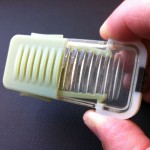
- 7. Visual inspection and rubber parts grip test.
-

- 8. ABS like part released. Easy visual inspection of internal components.

- The clear material allows you to see through it, so you can confirm if internal components fit and work properly.
- When you touch the rubberized parts from the release tool, you can actually feel if they provide an appropriate grip.
- You can hear a click, when the hook snap fits to the mating part, so you can have an audible indication that the clip is closed properly.
Due to the multi material printing capabilities of a Connex 3D printer, most plastics and elastomeric material properties can be reproduced with rapid prototyping models, adding a sensory experience to your design and pre manufacturing process.
Related Links
Want to get started with 3D Printing?
Our 3D Printing resources can help you to:
Posts related to 'Why Connex multi material printers can produce a sensory experience from a prototype'
